What we see today in the world is so much of creativity being used for dark purposes
A conversation with Robert Sternberg on how our notions of creativity and intelligence are outdated and misaligned with the challenges we currently face.

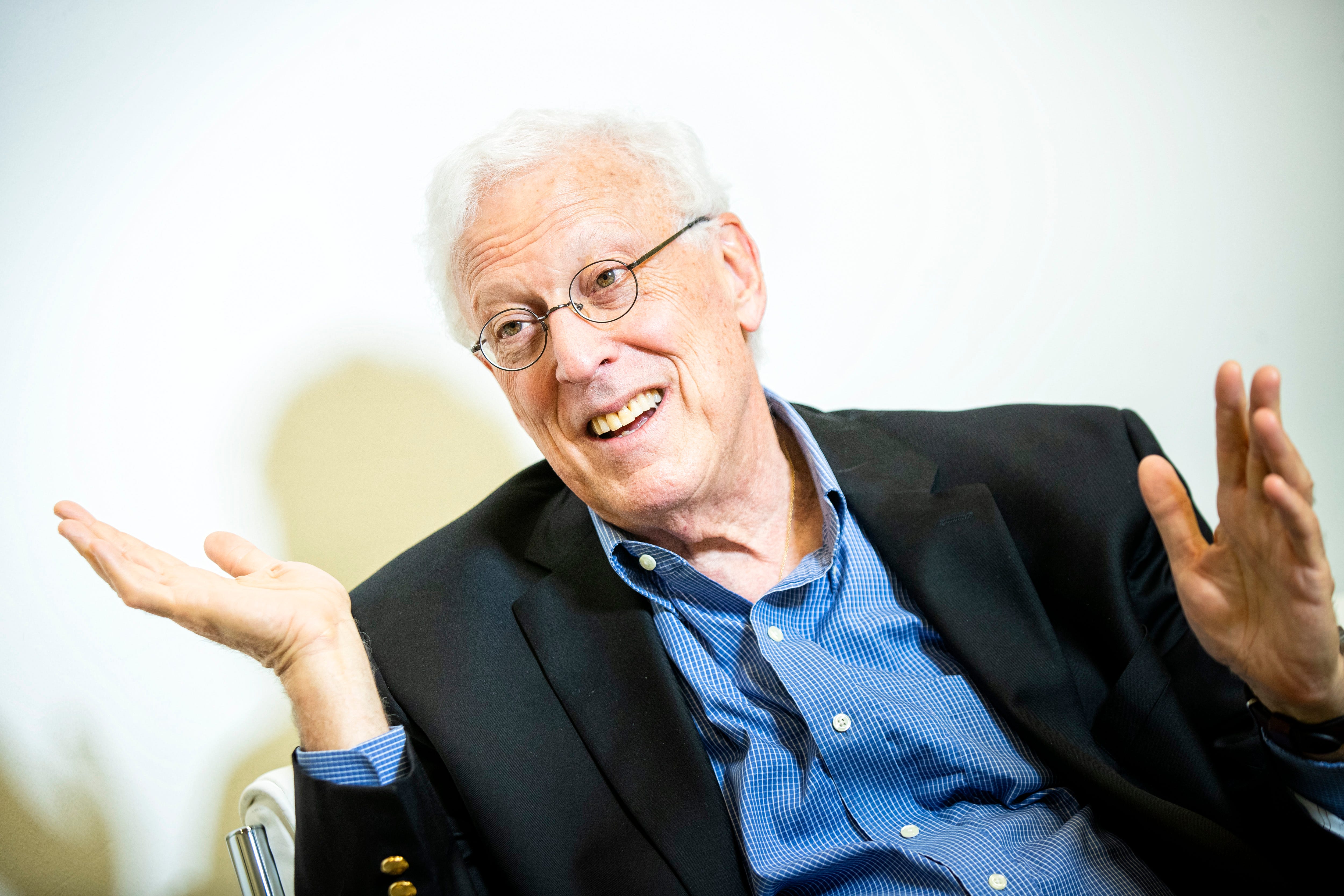
Robert J. Sternberg is Professor of Psychology in the College of Human Ecology at Cornell University. He holds 13 honorary doctorates and is a fellow of the American Academy of Arts and Sciences and the National Academy of Education. His influential contributions to the fields of intelligence and creativity have fundamentally shaped these fields of study. His other areas of expertise include wisdom, thinking styles, teaching and learning, love, jealousy, envy, and hate.
He sat down with Professor Anna Abraham and Dr. Desiree Sharpe from the Torrance Center at UGA in June 2025 to record this conversation.
Below is link to the full audio interview. We recommend listening to the interview while reading through it. Audio and video excerpts are embedded within the interview transcript if you prefer a brief listen. Enjoy!
Anna Abraham
We can't tell you how thrilled we are to have Bob with us. He is really singular in the field of not just creativity, but also intelligence, wisdom, giftedness, and many others. I want to start off by saying that one of the first works I read of Bob's was the Handbook of Creativity which I came across just when I started my PhD. It was incredibly informative and helped steer my path on what I wanted to study in the field. Saying that Professor Sternberg is prolific is kind of an understatement in terms of what he does. He has written several books and thousands of articles. I don't know if you have a number on this, Bob, but I think you might find it hard to keep up with yourself. Essentially why we invited him to interview for the Substack is because a lot of what he's done is so instrumental to the audience that we serve in the Torrance Center, which is mainly educational professionals. Also because of his work in creativity, intelligence, and wisdom, which I think is such an underappreciated topic, as well as giftedness. We've decided to mainly focus the interview on the last two years of his work. But first, we want him to answer our curiosity question: For someone who's had such an illustrious career as you have, Bob, can you tell us a little bit about your trajectory? How did you get to studying all these subjects and doing the things that you did? Looking back, can you chart how this course went?
Robert Sternberg
Yes. Well, I have a secret. And the secret is not, it's not as I sometimes say, a hundred monkeys in the basement. It's that I study things I stink at. I even wrote a paper for the Annual Review of Psychology called, “I study what I stink at.” So, the trajectory is that I just take things I do badly and try to understand why I do them badly.
I started in intelligence because as a kid I did poorly on IQ tests and I wondered why I fared poorly on IQ tests. I started studying creativity because after my first year in graduate school, Endel Tulving, my undergraduate advisor, was at the Stanford Center for Advanced Study in the Behavioral Sciences and I was describing the work I did in my first year. And they said it went really well. I got these great results. And they said, well, what are you going to do now? And I said, well, I want to study intelligence, but I don't know how. So, they looked at me like, well, this is a guy who's a one idea guy and he's already run out and he's only 22, which is good. You should be at least 23 before you run out of ideas. So, it was very embarrassing. The way they looked at me, it's like I remembered it was though it were yesterday. So then I got interested in creativity.
I started studying wisdom because of really bad advice I gave to one of my graduate students about her taking a job at a place that was prestigious but a really serious mismatch to her. I told her to go to the more prestigious place instead of the place that was a better match and that advice actually sucked. So that's how I study.
I studied love when I was in a failing romantic relationship. I just study things I don't do well and since that's almost everything, I've got lots of things to study.
Anna Abraham
That's a fascinating way to look at it. Thank you so much for that beautiful answer, Bob. We picked a couple of your papers from the past two years, and we're going to ask you questions around a selection of them and then perhaps go further into areas that we find of mutual interest.
Desiree Sharpe
Let’s start with the paper about extracurricular activities. Are extracurricular activities really extracurricular? The position that activities that matter least in school are the ones that best teach real world critical and creative thinking is something that I would love to hear more about in terms of defining creative thinking versus critical thinking. This is something I often need to bring into professional development with teachers because they often really jumble them and it's really important to understand them as well-defined, but also where they overlap. So how would you define them independently and how they might work in symbiosis together?
Robert Sternberg
The deal on that paper was that, was sort of a deal I make in a lot of my work, and that is if you look at how frayed up our country is in many ways with polarization and economic issues and hate. I think a lot of the problem is that people don't learn how to solve real problems in school. They learn how to solve academic problems. And academic problems don't look like real problems. And we know it's hard to get transfer of training from even settings that are quite similar to each other. You know, you do something in one setting and then you go to a similar setting, and you don't get transfer.
If you look at school problems, especially test problems that are very well defined, they tell you exactly what the problem is. There is a clear path to solution. There's a single answer. There's no emotional involvement. The problems are very abstract. The consequences of whether you solve it or not are minor. They're solved individually rather than in groups. They're very structured. Look at the problems that we tend to give kids in school and that we test - I have 14-year-old triplets, and my son today is taking the Algebra 1 region in New York State and those problems are going to be very well-structured and multiple-choice and there's one answer. If you look at the problems we're facing in our lives, they just don't look like that.
So, the point I made is that we should be teaching in school more the way you learn about extracurriculars. So, for example, the triplets all do cross country and track. And what are some of the things you learn? Well, some of the things you learn are that hard work really matters a lot, especially for distance running. You can be almost as good as you want to be if you're willing to work for it. So that's one thing they learned. Another thing they learned is that if you just run the way everyone else does, you're not going to win. So, you have to find some creative way of how, what's my design going to be to come out ahead of them, even if it means like in the beginning you're slower and maybe in the middle you speed up or at the end, but you need to do something that sets you apart. You need to work in a team. You have to work with other people. You have to devise a training program for yourself because a lot of it is about whether you're a self-starter and whether you know how to prepare. There's one other thing I think that's important to mention, and that is sometimes you just need courage to persist despite the long run, the bad weather, the terrible course, and so on. I mean, I could go on.
Extracurricular activities look a lot more like the problems you confront when your kids aren't doing what they're supposed to do. The point of the paper is we should, in our school teaching, learn from what they do in the courses that don't count. And that is use problems that have characteristics that are similar to those we face in our daily lives.
And I think one of the reasons that our leadership in this country is so lacking is that they didn't learn how to be courageous. If you look at our Congress, I mean, we have people who went to Harvard and Yale and Princeton, and they're terrible. They can't get anything done. And what they do is often is really poorly thought out. They just fall over like dominoes. They didn't learn how to take a stand, to speak for what they really believe. I wrote a paper this year on moral intelligence. They seem to be totally lacking it. For whatever their SAT scores were, they don't have any moral intelligence. They don't even seem to care about doing the right thing. And those are the kinds of things you learn when you're on a team, that you have to work with others, you have to support your team, you have to be fair, you have to be just. And so that's why I wrote that paper.
Anna Abraham
I love what you said. What we're preparing kids for is not practical. It's almost like extracurricular activities are set up to develop all of aspects of creativity that are sort of person-based, like to develop the kind of structure that you need in terms of courage, in terms of risk-taking, in terms of learning how to react in a changing situation, how to work with others and so on. When we think of transfer effects, it's almost like an even further transfer effect, right? It's like training up the things that underlie your ability to do anything really well. But that these things are so hard to measure in terms of its transfer effects, because the near effects are very hard to find, but the far effects are hard to evidence - that doing something at the age of 14 helps them in their adulthood. We tend to only examine immediate transfer effects or immediate results, but there is no paradigm that seems to sort of argue well enough about this “drip effect” of doing all of these things early on over time and how it all comes together.
Robert Sternberg
I actually wrote a paper recently in which I likened intelligence in the real world to an obstacle course, to running an obstacle course. And what life is really like is you're doing something and then something screws up or you get an obstacle. Someone gets in your way. You don't have enough money. You don't have enough resources. You get sick. The plane is canceled. The weather got worse. That's what life is really like. You'd like to think that those are exceptional circumstances. But that's the way most of life is. And people don't act the way they wish they would.
The problem with schooling is that you're sort of taught that your IQ or your SAT scores or your GPA is going to get you through life. And in the real world, what is it worth?
I was, when I remember thinking when I was president of the American Psychological Association, I can't think of one instance where high IQ would have helped me with any problem I confronted. And, in fact, a problem with the people on the board is that they tried to use their IQs to solve problems that aren't susceptible to IQ. It's like having an argument with your husband or your wife or your boyfriend or girlfriend and trying to show how much smarter you are than they are. That just doesn't work. So, I wish that our schools, when they're teaching for creativity or teaching for anything really emphasize more how do you use this in your life? And that's what I try to do. I teach courses on creativity, intelligence, wisdom, adolescence. I try in my own teaching to emphasize how do you use it? I mean, what are you going to do with this stuff? And if you don't know what to do with it, then why did you do it in the first place?
Desiree Sharpe
Absolutely! I don't know if you've seen Dan Meyer's TED Talk. He's a mathematician and a math teacher, and he basically states exactly what you stated about curriculum where it's prescriptive. They're giving you every single piece of information you need to know out of the gate, and you just have to plug it in. And where is that ever going to help you in life? And so, he walks it back and takes away all this information and then asks the students, what do you need to know to solve this? And then how are you going to go find it? And I think that really blends that creative thinking and critical thinking to where you have to be so open. And available to options and brave and non-judgmental. And then you do need to make a plan.
Robert Sternberg
Yeah, and the other thing is, to follow up on what Desi just said, is that you make a plan and then after five minutes it's no longer working. I mean, real life problems change as you go through them. You know, it's like when you have a problem with your kids or with your spouse or whatever you're dealing with, the problem changes. It could change every day. It could change every hour. Whatever the problem was a few minutes ago, it can change very quickly into something else. So, schools should look at what real problems are like and then teach to that. One of the things I wonder about looking at my own kids' futures: I took calculus twice and I don't think I've used it once. And I really wish that they had taught probability and statistics when I was in school because that's what you use. That's what you need all the time. So, I do think it's important. It's not that everything has to have an immediate use, but hopefully you'll learn how to use what you learn.
Anna Abraham
I think this links to the second paper that I wanted us to explore a little bit, which came out last year – “Do not worry that generative AI may compromise human creativity or intelligence in the future: It already has” – which is a great title. You have very good titles for your papers in general. And it links back to what we're saying which is that because we don't understand how to solve what we do things for, the importance of why we learn what we learn, how to learn and how to have an all-rounded kind of education, we're not seeing the dangers of outsourcing our cognition to generative AI systems. This is a really beautiful paper for anyone who hasn't read it yet. I would love for us to discuss your motivations for writing the paper. So can you think back to what prompted it and then we can get down to the issues that you outline.
Robert Sternberg
I think that for those of us who teach, we all have the same problem, namely that all the stuff we've done for many years doesn't work anymore. In my university courses, I mostly gave take-home stuff, papers, and take-home exams. And the reason for that I think was a good one. In the real world, you don't get 50 minutes to solve 30 problems. For real world problems, you need to go into more depth, and you need to think about them and reflect. And so, I felt that having students do work on their own was more realistic in terms of the skills that you need to acquire. And then I, like many other professors, found the kids weren't doing the work anymore, or they were doing a fraction of it, because we're all like rivers, we take the easiest path forward. So, one thing that worried me is that using your brain is like exercise. If you don't use it, you'll lose it. So, if you never go to the gym or if you never walk or if you never lift anything, you start to lose muscle mass. I mean, that's for sure. That's not a possibility. That's a given.
If you don't use your intelligence or your creativity or your wisdom, you're going to start to lose it. Research by Carmi Schooler and others years ago found that people who took less demanding jobs mentally, showed declines in their mental performance at a substantially greater rate over the course of their lifespan than people who use their minds, which is to say it's the exercise principle.
This used to be a problem you worried about as people got near retirement age or when they got into middle age, but now it's a problem for kids who are in the single digits.
I went to Yale and everyone at Yale knew the story that Henry Ford II had to leave because he had someone else write a paper for him. And mistakenly left the bill in the paper. At that time, there was no one who heard that story who didn't think - yeah, he should have left. He shouldn't have done that. Today, the kids increasingly are using generative AI, and if you ask them why, they say - well, I'm busy, I have other courses, I'm worried about my girlfriend, or my boyfriend, there's so much pressure on me, blah, blah, blah. We all have reasons to take the easier course. And sometimes they feel that gen AI (and this will be more and more true) will just do a better job.
But the problem is, as I say to some of my fellow professors who disagree with me, that it is qualitatively different from what happened with typewriters and word processors and calculators. In those cases, what you left behind is that kids don't write as easily or well in their handwriting today. But okay, that's too bad, but they can manage quite well in their lives. Or they may not be able to do complicated statistics by hand that they would have once known because the computer did it. But that's okay because it's a specific kind of knowledge that you no longer need. I mean, you don't need to know how to drive a horse and buggy either, right? I mean, for most of us. Some people do, but most don't.
But the difference here is that we haven't had technologies that suspend our use of our intelligence and creativity in ways that generative AI is doing. It's changing what intelligence and creativity is so that now you're sort of a connoisseur of how to use those tools. That's just a reduced and, more honestly, more trivial use of your abilities. So, we, as a society, are creating a situation where we're damaging our kids and ourselves. We’re reducing their intelligence, their creativity, their attention spans.
And it's not just our kids, it's us too. I don't know about you, but I know my attention span has gotten shorter. And for what? For making some people in Silicon Valley very rich and it's making our lives easier. But you have to realize that if you lose your intelligence and creativity, you're still going to have to face problems that you don't know how to solve. Problems that are new, that are novel, that are hard, and you won't have the mental wherewithal to solve them.
I feel like some of the dystopian novels are kind of coming to be. In Brave New World, there were five classifications of people from alphas to epsilons, where alphas were the brilliant ones and epsilons the not very smart ones. And I worry about two things. One is that we're sort of turning ourselves or our kids into epsilons. But even worse, we’re valuing that.
And if you look at society today, if you have a wise politician, what are his chances or her chances of getting elected compared to someone who's an entertainer or who's literally a toxic leader? We're changing our frame of evaluation. To value what I think we're creating, is what I call mediocracy, where we actually more value mediocre stuff as long as it's entertaining and keeps us going.
Anna Abraham
Absolutely. Desi and I come from a neuroscience background, and the whole idea of “use it or lose it” is just a fact from a physiological standpoint. The other things you pointed out I think are underappreciated as well. The leaning towards mediocrity. The less you produce, such as through writing – writing helps you think, writing is kind of thinking out loud – so, if you fail to do that, then you're really compromising yourself. Just like talking. Texting each other is not the same as having actual conversations with one another. That's also a way of thinking out loud. Our ways of communication have evolved for very specific purposes. It helps you learn how to think but also helps you discover what it is that is unusual about your own perspectives, your views, and what makes your views unique. And so, I really love that you pointed out that using generative AI actually turns people to the middling mean of the mediocre. A new study has showed that LLM dependence for writing assignments weakens neural and linguistics activity. There's also other work showing pernicious effects of using generative AI. A recent New York Times article, for instance, examines how mentally vulnerable people are being led astray because these generative AI systems are designed to keep you sucked in. I think “groomer” is probably the best word to use there. And you also explore this deluded notion in your paper that the work we created using AI is felt to be our own. I think that's probably one of the things that I'm most worried about. Not realizing we’re losing out skills as we outsource our cognition, our volition, our moral decision-making. So, I wondered if you could talk about this deluded aspect of believing the AI work is your own. Where does that come from (if you had to sort of speculate)?
Robert Sternberg
Well, if you look at the bias work, especially by Keith Stanovich and others, probably the strongest bias we have is the self-serving bias. We delude ourselves into believing what we want to believe. What's most interesting about this self-serving bias or something called “my side bias” is that whereas most cognitive errors show some correlation with IQ, this one wasn't. And oddly, people who are smart often show more of it because they convince themselves, “well, I'm so smart.” By thinking you're immune to it because you're too smart, you become more susceptible to it. It's one of the complaints I've had about schooling since I was starting my career. And that is by emphasizing so much test skills and school smarts, you can convince people that they can solve their problems in life by school smarts. You have people who being hired by for school smarts. You're creating a hierarchy in society by school smarts in addition to the perpetual money hierarchy. And so, what happens is you get people who have very high opinions of themselves, who are not cognizant of what it takes to successfully solve problems in the world. And if I am one of these people and I start using generative AI, I don't want to say to myself – “well, I'm a cheater or I'm a lazy or I'm claiming credit for someone else's work.”
Self-serving bias translates as “what do you mean that this is someone else's work? This is my work. I'm the one who gave the sentence prompt to ChatGPT or the phrase. Or the few words that told it what to do. I'm the executive in this process … what I call the ‘meta’-component. I'm the big cheese behind this and it's just my sermon.”
I was just talking to my wife Karen this morning who's teaching the introductory child development course in the Fall at Cornell here. She was thinking about giving an assignment where kids would have to go around to parks and make comments about public places. She literally sent me her planned assignments this morning and said, well, I think these are things that generative AI can’t do. So, I fed them into ChatGPT and they already did it! And if they see their friends doing it, why should they go around to parks or public places and have to pay bus fare or get the car when they see their friends doing it with a push of a button? There's a lot of social pressure. They're going to have time for other things. Why should I be a sucker? And so you end up sort of selling your soul to the generative AI programs, but not realizing that you're doing it. When people sell their souls, they usually don't look at it that way. The people selling out to politicians, say, in the United States. It becomes like a cult. It's like the politics in part of the U.S. It's a cult.
And so now it's become a cult of generative AI, and you don't even realize you're joining it. Good cults are ones that people don't feel like they're in a cult. We're destroying ourselves for these false gods, whether it's money or living in a fancy community in Silicon Valley or whatever it is. And the result is that we're degrading our own civilization.
Look, it's 2025 and we have war in the Middle East and war in Ukraine and wars in Africa. We have crazy polarization. In the late 20th century and early 21st century people were very excited about the so-called Flynn effect that IQs in the 20th century had increased. That's great, people are getting smarter. The only trouble being that first of all now we have more of a reverse Flynn effect. But worse than that, what I think the Flynn effect showed is that how little IQ is worth. 30 points in 100 years, that's two standard deviations. That's the difference between an average IQ and a so-called gifted IQ. So, what did that increase by us? Polarization, wars, poverty, bad climate, pollution, gun violence. So, you know, what we're doing in the schools, it doesn't cut it. And you don't need me to tell you. Just read the newspaper, read the CNN or Fox News or whatever you read, and you'll see that scholastic intelligence, academic intelligence, it's not solving anything.
Desiree Sharpe
It speaks to that idea that you describe – is life today for humans better than it was 75 or 100 years ago? And that's a really grand question that also speaks to this idea of giftedness or the weight of IQ as being this ultimate tool for solving world problems that's utterly failed. Then the better question to ask is what are we focusing on in education? What are schools for? And potentially, how teaching for creativity is a really important approach to education. I think that in your newest theory there are really important points that would help inform people who are in charge of deciding how curriculum gets played out or how we encourage people to learn. Your person x task x situation interaction theory of creativity is rather complex. We would love for you to break it down because I do think a lot of our listeners would actually benefit deeply from understanding it and could generate their own ways of application. So, I would love to kind of hear a walkthrough of it from you.
Robert Sternberg
I'm going to do this in two parts because there's something else you said that I'd like to respond to. I spent much of my career thinking I was doing what you said. And that is I wrote books on teaching for creativity. I wrote articles on teaching for creativity. I gave talks on teaching for creativity. And all that time I thought I was doing something good. And now I don't think so. And so, I first want to explain why. The reason is that I missed the detail, but it's a really important detail. And that is that both intelligence and creativity can be used for good, but they can also be used for bad and for really terrible things. And what we see today in the world is so much of creativity being used for dark purposes. Whether it's people who work in Silicon Valley for social media companies who for very high salaries, what they want to do is get you to do more clicks. They want engagement. They want you to see the ads or to keep going so that they can make money off you. Or it could be that now we have people who are working to make more and more deadly bombs, or we have people who are working to enrich the extremely rich. It's never enough. So, what has happened is that a lot of creativity has become toxic. And I've written two papers on toxic and dark giftedness too.
So, it's not enough to teach people to be creative. I think all these gifted programs are totally on the wrong track. And I think NAGC, the National Association for Gifted, is totally on the wrong track. What we are not teaching is wisdom. Kids who will become wise and look for a common good. And I don't mean the common good of people who are their race or their religion or their ideology or their nationality. We need wise leaders who set role models. Who can you look at as role models today who seek a common good (not just for people like themselves), who want to balance the interests of different groups and who use moral intelligence, who have a sense of perspective and simply want to do the right thing because it's the right thing to do? And I think that that is so far gone today.
So, what I would like to see in gifted programs and creativity programs is teaching for what I have started to call “transformational creativity,” which is creativity combined with wisdom, creativity that makes the world a better place.
Not just for you, not just for people of your religion or your nationality or your political party. And not use the creativity to stick it to people who are not like themselves, but to make the world better. And that is what I think we need to be doing.
So, I do want to put in a plug for transformational creativity, creativity to make the world better at some level. It doesn't have to be the whole world, but at least that you're trying to make things better rather than just how can I have a bigger house or how can I have more power or how can I have more Twitter/X followers or whatever it is. That's what we need to be doing in gifted programs.
Now, you know, this question, should we do acceleration or enrichment, to me is so 1950s, and that's what I see the organizations doing. They're still living 100 years ago, and these are our national organizations. The meetings are the same meetings. I hear the same talks that I literally heard when I started in the field, which was 50 years ago. What we need is how can we teach people to do good things, rather than to use their gifts for bad purposes. And when schools take the attitude that, well, you know, that's for the parents to do or that's for the religion to do, that's not happening. If they don't do it and nobody's doing it, we end up with increasing polarization.
In terms of the other thing you mentioned about my person x task x situation interaction theory, the point is real. It's not actually complicated. It's actually simple. It's that abilities don't exist inside you. Intelligence, creativity, wisdom – they're not in you. They're in how you interact with the tasks you need to do in the environments you need to do them. All of us, given certain situations, can act really stupidly, and that includes me. And I could have spent this whole time talking about the stupid things I've done. So, it doesn't matter how smart you are. In certain situations, we all act stupidly or with certain kinds of tests. And people who we don't think are so smart in certain situations actually act quite smartly. The point is that we should stop imbuing people with the notion that intelligence or creativity or wisdom are strictly biological. I know I disagree with people like Richard Haier on this, but they're not. I edited a book called, with Yale Press some years ago, Why Smart People Can Be So Stupid. And we see it all the time. What we need to learn is that what matters is not what your IQ score is, it is not whether you're in the Mensa or the Two Sigma Society or the Six Sigma Society or which prestige society for your IQ. What difference does it make if you don't do anything with your life? What we ought to be teaching kids is what matters is what you do with your life. It's what you do with your abilities.
It's like, you know, what is a good person? It's not that there's some goodness level in you. It's that some people do good things. That's what makes a good person.
What makes you a smart person is doing smart things. It's not the score on an IQ test. Being creative is not the score on a creativity test. It's doing things that are novel and useful, and, I would emphasize, that make the world better, that are transformational.
Anna Abraham
I think the difficulty from the kids’ side … let me try and articulate this … at UGA we can do these First Year Odyssey courses. Like a one credit seminar course for undergraduate freshers. It is to whet their appetite for what it is like to do research and get deeper into a particular topic. My course is on Unleashing the Creative Imagination. And one of their projects is to talk about their creative hero. So, pick your creative hero and tell us what makes them your creative hero. It's been sort of astonishing for me to see from this simple assignment how much that the world has changed from my time as a kid because the students seem to value creativity very differently from the way perhaps my generation did. And this is primarily because we didn't have as much information. They often pick heroes according to likes or follows or how many albums have been sold. Thinking back to my time as a young person, even with the artists I listened to a lot, I would not have been able to tell even at that age of 18, how many albums they sold, how successful where they were in terms of money made, and so on. It was much more about how the music made me feel. I liked a book because of the way it conveyed something. So, I think the focus has so shifted in terms of how we value things. A lot about how we estimated value was very much from an intrinsic point of view. Like sort of like, do I like this? Do I like to go to this place? Do I like to read this work? Do I like to listen to this music? Do I like to watch this movie? You didn't have as much access to what everybody else in the world thought. I think the hard part is that all of the normal ways in which we would kind of assess it have kind of taken a backseat because I don't know perhaps how I feel about this music personally I haven't had enough time to think about it or really ruminate in it by myself. Because the minute something comes out, I know what 20,000 other people think of it, including the people I like, dislike, envy, or admire. I think it becomes a little bit harder to form a valuation from any place of internal strength. Money, power, prestige, and follower-ship is so easy to put your finger on. And it glitters in front of all the kids. You're the popular one because your thing went viral. So that's all they care about. So, I think part of what makes it hard for younger people to aim for transformational creativity is that they live in such an extrinsically coded world. The intricate intrinsic sensibility of why something is beautiful or intelligent or wise and so on, I don't know if you can recognize it or even value it if it's not really trained up. I mean, am I making any sense?
Robert Sternberg
Yes, you're making sense. And I totally agree with what everything you said, especially that. There's just one little thing I would point out. And that is we would like to think it's totally changed, but in some ways it's not. I sometimes talked about the “pseudo-quantification fallacy” where we tend to think if something is quantified they must really tell us something important. And we see that with X-followers today or with how much money they're making. And would like to think, you know, these kids, their values are so darn spoiled. But if you think about it, let's take a random field, the field of intelligence in schooling. We have put so much emphasis on what were your SAT scores, what were your ACT scores? What's your IQ? If you want to get into this gifted program, you need an IQ of such and such, or you need a GPA of so-and-so. When I was at Oklahoma State as provost, you could get in solely by test scores, grades, or a combination of the two. So, this pseudo-quantification is something we have done too in our generation and past generations just with different aspects that are in some ways just as trivial as what these kids are doing, whether it's IQ, SATs, money, GPAs.
You'd like to think well we're university professors I mean we're too smart for this crap but we're not. Because now what's happened is that we’ve become too interested in journal impact factors. What journals are you publishing in and what is the impact of the journal? Forgetting that in high-impact journals, it's just a very small number of articles that give it the impact. Most of them are hardly ever cited at all. And a lot of the stuff that gets published in top journals gets in because it doesn't offend anyone. None of the reviewers are really upset that their apple cart is going to get overturned. So, there’s an awful lot of these metrics. There's the journal impact factor. There's the number of citations. There's the H value. What is the national rank in US News of your university? So, we're doing the same thing as academics, and we should know better, but often we don't.
Anna Abraham
Yes, that’s so true.
Robert Sternberg
I just wanted to say something about heroes because I have a creative hero, and I wanted to say something about mine. And I have a number but one of my best is that was my undergraduate advisor at Yale, Endel Tulving, who made the point that he made his career out of the following – if a lot of experts believe something, it may well be false. And for example, he said almost everyone at the time believed that in frequency theory, the more you repeat something, the better you learn it. So, he showed that often you could repeat something more and learn it more poorly. But his point was that just because a lot of people believe something, it doesn't make it true.
And that's sort of the way I've run my career. It's been kind of counter-crowd based. That if a lot of people believe something is probably wrong, you know, they think IQ is important or they think creativity test scores are important. My theory of love, was the same in arguing that love isn't one thing and that it has these different aspects.
What happens though is that you get caught up with the crowd. It's comfortable that people like you and that you don't threaten them, and you feel like you're a part of something. And to be creative you have to, at some level, defy the crowd and come up with your own ideas. And you even have to defy yourself. You have to be willing to let go of things, ideas that no longer work. You know, we see this in academia, people who have an idea when they're 30 and they're still pushing it when they're 70. But it's often hard to let go of our ideas because we've gotten so much reinforcement for them and we're afraid that the next idea won't be as good and that people won't like us anymore. Or that we'll lose money because we've made all these products based on the old idea and now no one will want to buy them. I've always changed my theories, which is unusual.
All the theories are wrong. My theories are wrong, your theories are wrong. And so, if I didn't change them, if I don't change the theory after I think, then am I actually starting to be foolish enough to believe that it is correct. Then I lose.
I mean, once you believe the theory is correct, you're done being creative because you just know the truth. So, you don't want to be in that situation.
Anna Abraham
I think it's just powerful and actually beautiful to see someone as successful as you are say these sorts of things. Because you're absolutely right in how scientists and academics in general run for these weird metrics instead of true knowledge. There's so much grievance and misplaced energy at getting whatever it is – the high impact factor journals or enormous grants – again, it's all about the ease of evaluation.
Desiree Sharpe
Yeah, that's what it is for.
Robert Sternberg
You know we have about 65 people in my greater research group, and I just said to them – some of you are applying for jobs this year, and I'll tell you what not to do, which a lot of people these days are doing. They write a letter, and they say, I did this, and then I did this, and I did that, and I did the other thing, and look at all these things I did. And I said, so what's behind it? Who are you? What is it that generated all this stuff? And what I said to them is what you really want to do is figure out who you are, find some kind of meaning for your life. And then what you want to convey in a job application or a tenure application is not I-did-this-and-I-did-this-and-I-did-this-and-isn't-this-great? Instead, it is who are you? What do you have to offer that no one else has to offer that will somehow make the world a better place? What is it that you have to offer that's special, that's going to be of value?
Yeah, which is why gifted programs need to put much more effort into that and less into whether they're using acceleration or enrichment or which tests they're using to choose their kids as though the tests really tell you something important.
Desiree Sharpe
So yes, let’s get into the concept of effectivity and to your conceptions of gifted under- and over-achievement paper. You have been circling around this idea of effectivity as an alternative to gifted achievement. So, I would love to first kind of ask about why you think it's a better measure than IQ?
Robert Sternberg
I don't think it's about measures. It's about ideas. The notion of overachievement is ridiculous. I mean, the conventional notion that your IQ is this, but you're achieving at a higher level, so there's something wrong with you. What that tells you is that the test is incomplete or wrong. Overachievement is a predictor failure. It's not a person failure. So, the overachievement thing just doesn't even make sense. But I was more talking about underachievement. And what I was trying to emphasize is that the notion of underachievement often also is misconceived because it imposes the school administrators or teachers' view of what it means to be an achiever.
When I was at high school, I spent a lot of my time doing psychological research that I created, but it counted for nothing in school. It was zero, because it wasn't part of the curriculum. My son, Sammy, one of the triplets, he wants to be a numismatist, a coin person, when he grows up, but that counts for nothing in school because they don't have numismatics. Kids have all these different ways of achieving and we assume – here's our mold and if you don't achieve in this way then you don't count. When my son Seth, my older son, he was in business school at Stanford. And he was considering dropping out. I said, Seth, you really ought think about that because getting an MBA from Stanford would be really useful to you, I think. And he said, well, you know, I started this business, and I have the possibility of funding, but it means I have to drop out. Well, he did the right thing. He's done really well. But for him being in school at that point in his life, wasn't the thing to be doing. He was right.
We need a much broader notion of what it means to achieve. Some kids achieve socially. Some kids achieve in music. Some achieve in art. Some achieve in hobbies. Some in a business. And we're imposing this very narrow notion of what are your grades and what are your SATs or IQ. Not only is it an injustice, I have said in my theory of intelligence that people who are successfully intelligent are people who figure out what they do well, figure out what they don't do well, and then they make the most of the things they do well, and the things they don't do well, they either correct or they compensate by having other people help them.
What I try to do with my own five kids is figure out who you are. What do you have to offer? And that's different for every person. It's idiosyncratic. It's not that there's a mold you have to fit into. I say to my students and I say to my kids, if you want to succeed, figure out who you are and be just become the person you can be that no one else can ever be.
And that's what I want for them. I've tried to do, not always successfully. There's one thing I have to tell you before we're going to run out of time. When I was in first week in graduate school, Gordon Bauer had us over for dinner, my advisor, and he said, what do you want to do here in grad school? And everyone knew what he wanted to hear, which was some semantic memory. He was doing semantic memory. That's what we thought he wanted to hear. So, he says, what do you want to do? He had five new students. So, he asked the first guy, what do you want to do? And the first guy says, semantic memory. Gah, what a surprise! Then he asked the second guy. And the second guy, who I knew wanted to study perception, he says, semantic memory. And I asked this third guy, and the third guy of course says semantic memory, and I was number four. And I was sweating because I had no interest in semantic memory at all. I still have no interest in semantic memory. So, he comes to me, and he asks me, what do you want to do, Bob? And I think you can see from this whole interview that I'm not a cheap sellout like these other guys. I mean, they had no principles, they had no guts, they were cowards. So, he asked me, and I said, semantic memory.
I went home that night in my apartment and I said to myself, you know, I sold out. I am never going to do that again. I am so humiliated that I said I want to do something that I have absolutely no interest in. I am never going to do that again. And I never did. I never have done that again.
You know, you have to figure out who you are, and you have to stand up for it. And hopefully it's something positive that you have to contribute to the world. And that can't be because your advisor does it or your teacher does it or your parents want you to do it, they want you to do this or that or the other thing.
You have to figure that out uniquely for yourself and then be that person.
I say to my kids, all I want for you is for you to become who you want to be. And I say that to my graduate students. I don't want you to do what I do. I want you to do what you want to do and become the best you can be doing whatever it is you want to do for whoever you are. And I've had really a lot of very successful students using that formula. And they all do different things, but they become themselves.
Anna Abraham
Yeah. I think we'll take one last question if that's okay with you. This is a different paper of yours, which is on developing creativity in psychological science and beyond. This is one that we thought emphasizes a really crucial difference, because you distinguish between creative ability and creative attitude. One of the many things that you outline in that paper are characteristics of highly successful psychological scientists, like hard work, willingness to surmount obstacles, intellectual curiosity, honesty, courage, self-efficacy, and everything else. So first I'd like you to speak a little bit about ability versus attitude. But then I want you to go into a little bit more about something that's always fascinated me ever since I started in field of creativity, which is the ability to tolerate ambiguity. It was a big focus in early creativity research and has somehow died down. And I think a lot of our problems that you've spoken about so eloquently about the polarization that we see and so on, at some level – I don't think it explains it all – but a lot of it comes from just not being able to even entertain difference in general, the gray zone, the not knowing. Both of us are very fascinated, Desi and I, on tolerance of ambiguity, because we think of it as a sort of superpower I don't know why it has always captured my imagination as a scholar, even though I haven't had the ability to really examine it, I just wondered whether you could you could set us straight, whether we're completely mistaken or not, and whether it's just one of other things are perhaps more important, like, efficacy and so on.
Robert Sternberg
Well, one thing I cannot do is set you straight because I have no special knowledge that sets anyone straight. If I could set myself straight, I would actually be quite happy, but I certainly don't know that I could do it for anyone else. But that's a good place to end. I've written about this for creativity, but also for intelligence. I've written papers on intelligence is attitude. And it's very relevant to everything that both of you have brought up during this conversation. So, it really is a good place to end. And that is, if you look at people who are creative or smart, we put so an awful lot of emphasis on ability, whereas most of it is an attitude.
So, I've said, for example, about creativity, that almost anyone, probably anyone can be creative. But the reason they're not, is not because they weren't born creative or because they weren't raised creative. It's because they don't want to be. So why don't they want to be? It's because, in my so-called “triangular theory of creativity”, they don't want to defy the crowd. They want to go along and get along and be part of a group. I mean, academics are terrible about this. They join mobs, internet attack mobs. I lost half my family tree in Germany during World War II, and I wondered how could that happen? Well, if you live in 2025, you see it very well. People join mobs. Their IQs and their being at fancy places offer absolutely no protection against being part of a mob and getting angry and telling people what's right. That's why I can't set you straight, because no one can really do that for you, you have to do it for yourself.
That's what Endel Tulving told me – just joining the crowd might get you a lot of publications, and it might get you a job at a fancy place because people like you. I mean, you're doing work that supports me, or you have good advisors who I know, and I trust to think the same way I do. But just because everyone does this, it doesn't mean you have to do it. But that does mean you're going to get dumped on. You're going to make enemies. You're going to have people who don't like you. They'll attack your work. They'll attack you personally. I mean, I've been through all this. They'll find any reason they can. And you say, I can live with that. It's like Harriet Tubman saying that when you hear the dogs, keep going. I've been here. It's when you are being dumped on from right, left, front and back and you fall out giving up, you keep going. And then when you still feel like giving up, you still keep going. And that means that you can live with defying the crowd and the cost to you. And in the current politics, the costs are huge. We have a very vengeful group of people in certain governmental positions, not mentioning any in particular.
Being principled is hard. And it's much easier to succumb and suck up, but you'll never do anything transformationally creative that way.
The second thing is you have to be willing to defy yourself and to say I was wrong or what I thought was good for last year is no longer the case. And this is true with ideas, it's true in personal relationships, it's true with your ideology. The hardest thing is to find yourself in saying I was wrong or I have to grow or it's time for me to move on. It's time for this relationship to move on or change relationships or it's time for me to say, you know, I've run out of ideas on this, I'll do something else. And finally, you have to be willing to defy the zeitgeist, this sort of whole world view and say, that all these things they take for granted just because they take them for granted, we don't have to do it that way. Sometimes things we believe don't work anymore.
So much of intelligence and creativity and wisdom is in your attitude, and we should put much more emphasis on attitude. When I hire people, I say the main thing I look for is a “can-do attitude” that you know no matter what the challenge and how difficult it is and how much opposition there is, they're willing to go for it.
In terms of tolerance of ambiguity, I think if it's narrowly defined it sort of becomes like – here's a list of ten items to assess your willingness to tolerate ambiguity. I don't think it's about that. It's about something much bigger, which is what you're talking about, the two of you, and that is that the world is such an uncertain place. I wake up every morning and I look at the news. Every day it changes and lately it seems like things get worse every day. Maybe I'm missing something, I hope so. But that's the ambiguity – that whatever I believed yesterday may not work today. It's that you constantly have to be saying novelty is not something unusual in today's world. It's that jobs that existed may not exist. With chat bots, the whole nature of teaching has changed. With technology, everything’s changed. That's the way the world is. Things are constantly changing. Relationships are changing. In my theory of love, one of the intrinsic characteristics is that love cannot remain the same. It can't because intimacy, passion, and commitment show different time courses. Stories evolve. And so, love has to change. And similarly, your views have to change because the world is changing.
We talked about my person x task x situation interaction theory. The situation, the environmental context is constantly changing. And you have to change with it in a way that makes you adaptive to what exists now.
So, to me, if you look at tolerance of ambiguity as one of 18 factors on some personality test, I can see why people lost interest. If you look at it in what I think you're talking about, the Abraham mode, which is that's what our whole interaction is with the world, then you see why it's so important for creativity. Because it's like if I do this great impressionist painting, it might have been a big deal before Monet, but it's not going to be a big deal anymore. Well, it used to be that you to wait a couple hundred years. Now, what you did yesterday, today may be yesterday's news. It just doesn't work anymore. And we know as academics how pathetic it is when someone does something when they're 30 and they can't let go of it. And so, to me, your point is that that’s what adaptation to life is, that it's constantly ambiguous. And that means you have to change your ideas, you have to change your theories, you have to change the kind of research you do. So that's what the world is today.
Anna Abraham
Well, thank you for that. I think it's a wonderful note to end on. The openness to ambiguity, the acceptance that there's nothing but ambiguity. Intelligence and creativity is really learning how to navigate the uncertain world, and also, to keep questioning oneself, as in where do we think we are, and why do we think what we do, and why do we feel the way we do. This has been such a delightful conversation! Thank you so much, Bob, for taking so much time to speak with us.
Robert Sternberg
Thank you. It's such a pleasure meeting you and having the opportunity to talk to both of you. I really appreciate the chance. Thank you.
For more information about Robert J. Sternberg, visit his institutional webpage and personal website.
Thanks for reading! Subscribe for free to receive new posts and support our work.